 Shop By
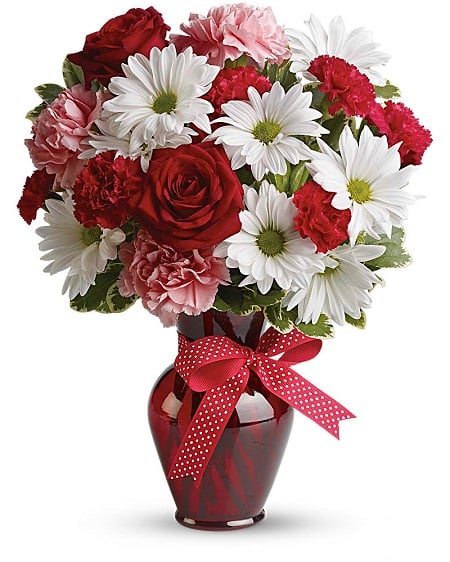
Flower Delivery Chula Vista: Same Day
Send Flowers to Chula Vista CA
Jessica called us last Tuesday afternoon, needed birthday flowers for her mom in Chula Vista by end of day, she was calling from Seattle and honestly sounded a bit frazzled (her words were something like "I completely forgot and I feel terrible"). Bonnie, who answers most of our calls, walked her through options, talked about what her mom might like based on the occasion, got it sorted within maybe eight minutes. That personal back-and-forth, that's the thing people tell us they value most, because when you're sending flowers for someone's 70th birthday or consoling a friend who lost their dad, you don't want to just click buttons on a website and hope for the best.
We get calls daily for Chula Vista. Marcus ordered anniversary flowers last month (22 years, he made sure to mention that), Sarah sent sympathy flowers to a colleague's family after a sudden loss. Every single one of these orders matters to someone, which is why having Bonnie or Ayu actually answer the phone and coordinate with our local florist partners in Chula Vista makes sense. They know flowers, they understand urgency, they get that a bouquet isn't just decoration, it's communication when words feel inadequate or when you're 800 miles away and want to be present somehow.
When someone calls versus ordering through an automated system, we can ask questions. What's the occasion, what's their style, is this celebratory or somber, do they have flower preferences we should know about? That context shapes everything, the arrangement style, the color palette, even delivery timing. You cannot automate caring about whether those roses arrive before your grandmother's birthday lunch or after, that requires humans who actually give a damn.
Same Day Flower Delivery in Chula Vista
Here's the deal with same day delivery in Chula Vista (and everywhere really, but specifically here). If you order by 1PM Monday through Friday, we can typically get flowers delivered that same day. Saturdays the cutoff moves earlier to 10AM because, well, florists are busy on Saturdays and delivery windows get tight fast. These aren't arbitrary times we picked, they're what actually works when you're coordinating with real flower shops who need time to create arrangements properly and get them delivered while they're still perfect.
Why timing matters so much is this. Flowers are living things, they're at their peak freshness for a specific window, and if a florist is rushing an arrangement at 4:45PM because someone ordered at 4:30PM expecting same day, corners get cut. We learned this the hard way years back when we were still figuring everything out. Better to set realistic cutoffs and deliver exceptional flowers than promise the moon and send something thrown together. Nobody wants that, not the sender, not the recipient, not us, not the florist.
Chula Vista's location in the South Bay works in everyone's favor here. Our partner florists there can cover the area efficiently, they know the neighborhoods, they know which areas might have delivery challenges (gated communities that need advance notice, businesses with specific receiving hours, that sort of thing). When Bonnie takes an order for Chula Vista and coordinates with our local florist, all that knowledge comes into play without the customer having to think about it.
Geographic specifics matter more than people realize. Chula Vista isn't some generic city, it's got its own character, its own rhythms. Deliveries to Eastlake versus Otay Ranch versus the older neighborhoods near Third Avenue, these aren't interchangeable. Our florists know this, which is why we partner with people who actually work in the area rather than trying to centralize everything through some distant warehouse model.
How We Actually Work (And Why We Tell You)
We're order gatherers. There, I said it, and honestly, it feels better to just be transparent about it upfront rather than hiding behind vague language about being a "flower delivery service" or whatever euphemism makes it sound more impressive than it is.
The reason we tell you this goes back to how we started. Picture this, mid-2007, we had a tiny shop in a coastal town, the phone would not stop ringing with people wanting to send flowers to other places, and we kept turning them away because that wasn't our model. Until one day (probably with less than $20 in the cash register, that number haunted us for months), we looked at each other and thought, what if we just took the order and found a florist in that town to fulfill it? What if that was the actual business?
That first arrangement we coordinated, I drove to meet the florist, my baby daughter in tow, she promptly pulled down a gift display and shattered it everywhere (still cringing about that), but the florist, Bev was her name, she got the concept immediately. We would send her orders, she would fulfill them beautifully, everyone wins. From that mortifying introduction, we built a network that eventually grew into what we do now across the United States.
We evolved from that struggling shop into something different, not because we're brilliant business minds but because we were desperate and willing to try something unconventional. When we eventually partnered with Dan and Dennis and brought this model to the U.S. through connections with a major American flower network (you can read more about that whole journey and how we ended up here on our about us page), we knew we wanted to stay small and personal rather than scaling into some massive corporate operation with 17 layers of management and automated everything.
Our team right now is me, my wife, Dennis, Dan as mentor, plus Bonnie handling customer service and orders, Ayu managing order coordination, and Phoebe who specializes in sympathy arrangements from Vancouver. That's it, that's the whole operation. We work out of a small office, we don't have marketing departments or legal teams or corporate retreats. When you call us for flower delivery to Chula Vista, you're getting Bonnie, not a call center script reader in some distant state who doesn't actually care whether your flowers arrive on time.
Being an order gatherer isn't something we're ashamed of, but we understand why some people in the industry treat it like a dirty secret. The key difference, at least from our perspective, is we tell you exactly what we do and why, we've vetted our florist partners (they store flowers at proper temperatures, they have actual talent, they care about quality), and we stay involved in every order rather than just auto-routing them through algorithms. That human oversight matters when something goes wrong or when a customer needs to make a last-minute change.
Occasions We Handle for Chula Vista
Birthdays are huge, obviously. People call us constantly sending flowers to Chula Vista for birthdays, sometimes it's children sending to parents, sometimes it's long-distance friends, sometimes it's someone who forgot until the last second (we've all been there, no judgment). Birthday flowers work because they're pure celebration, there's no subtext, just "hey, I'm thinking of you on your special day" delivered in petals and stems.
Sympathy arrangements are the other side of that coin, heavier, more meaningful in a different way. When someone calls us for sympathy flowers going to Chula Vista, the conversation changes. Bonnie slows down, asks gentle questions about the family's preferences, whether there's a service, what would feel appropriate. These orders matter differently because they're often the only tangible thing you can send when someone's grieving. Phoebe handles many of these, she's remarkably good at understanding what families need even when they can't articulate it themselves.
Anniversaries, new babies, graduations, apologies (yeah, we get those calls too, usually men calling somewhat sheepishly asking what says "I messed up" in flower language), congratulations on new jobs, get well soon arrangements for hospital deliveries or home recovery. Every occasion has its own emotional weight, its own timing sensitivity, its own unspoken message that flowers somehow convey better than words alone.
The reason we handle all these different occasions well, or try to anyway, is we never lose sight of what's actually happening. This isn't about flowers, not really. It's about someone trying to connect with someone else in Chula Vista, trying to say something meaningful, trying to be present when distance or circumstances make physical presence impossible. The flowers are just the medium, the real product is helping people communicate love or sympathy or celebration or apology through something beautiful that shows up at their door.