Shop By
Sending flowers to Apopka, FL when you're not in Florida
Most of the orders we take for Apopka come in from somewhere else. An adult son in Portland sending to his mom in Wekiva Springs. A sister in Connecticut sending to a brother at AdventHealth. A friend in Charlotte sending to a childhood friend who just moved into Bronsons Ridge. The buyer is never the recipient, which is the thing that actually shapes every choice on a page like this. You are not picking a bouquet for yourself. You are picking something to land on a doorstep or a nurse's station in a town you cannot see.
One other thing about Apopka worth knowing before you place the order. People who live in Apopka are particular about the distinction between Apopka and Orlando. They do not consider themselves an Orlando suburb. They are Apopka. The city grows more indoor plants than almost anywhere in the country. Hundreds of nurseries, ferns, orchids, tropical foliage, a farmers market on North Park Avenue, an annual foliage festival in April that brings plant doctors to the public. None of that has anything to do with the flowers in your arrangement. Those still flew from Colombia, cleared customs in Miami, and came north on a refrigerated truck. Miami to Apopka is about 250 miles. One of the shortest supply chains in the continental US. Your local florist is working with fresher stock than almost anywhere outside South Florida.
What I tell Apopka callers about Florida heat and cut flowers
NCCPF Certified Florist · 30 years on the bench · 40,000+ arrangements · About our NC team →
The freshness advantage is the first thing worth saying, because most people don't know it. Cut flowers in the US come from Colombia and Ecuador mostly, on refrigerated flights into Miami. Miami to Apopka is a one-day truck run. The wholesaler in Orlando gets the stock in the morning and the florist in Apopka picks it up the same afternoon. Compared to a florist working in Denver or Chicago, where the same box has been on the road for three more days, Apopka is working with stems that are two or three days younger. That window matters. It is the difference between a rose that opens fully on day four and one that opens tight and quits.
Then there's the heat. I have been doing this for thirty years and I still flinch when I get a July call from Florida asking about hydrangeas. Hydrangeas wilt on a 90-degree porch inside fifteen minutes. Tulips fold. Ranunculus shatters. What holds in Florida summer is chrysanthemum, carnation, alstroemeria, gerbera, sunflower, and the tropical stems such as bird of paradise, heliconia, and anthurium. Those are the stems a good Apopka florist reaches for when the forecast says 91. I tell callers that, even when they came in wanting something else.
Last thing. Apopka is the indoor foliage capital of the world. Hundreds of greenhouses within ten miles of wherever the arrangement is going. Orchid growers. Fern growers. Tropical plant wholesalers. None of those plants are in your arrangement. Your arrangement is still coming from Colombia via Miami. It's one of the odder facts about sending flowers in this town. The plants are everywhere. The cut flowers are not local at all.
Order before 1PM weekdays and it's there this afternoon. Saturdays cut off at 10AM. Mixed Color Bouquet starts at $59.99. Flat $16.95 delivery across Apopka and nearby.
Four that work for the heat, the hospital, and the gesture
A Florida summer bench leans toward heat-resilient stems and plants that outlast cut flowers. AdventHealth Apopka is the hospital most get-well orders land at, which shapes the palette and the size. The four below cover a family birthday, a hospital windowsill, a sympathy-to-home register, and the most forgiving plant basket on the US Teleflora catalogue.

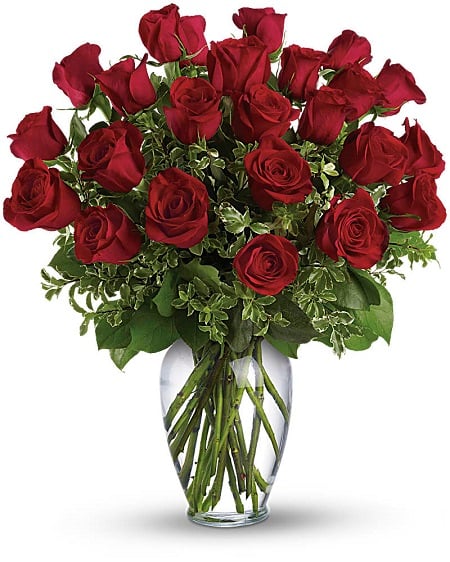
Yellow cushion mums, purple pompons, red mini carnations, and alstroemeria in a clear ginger jar with a gold ribbon. No rose, no lily, by design. Mums, carnations, and alstroemeria are three of the longest-lasting stems in the US trade. Ten to fourteen days in a vase in normal room conditions. In a Florida July, that is the difference. The buyer most often is an adult child sending birthday flowers to a parent in a new subdivision and does not want the "they died in five days" text message. Starts at $59.99.
View Product
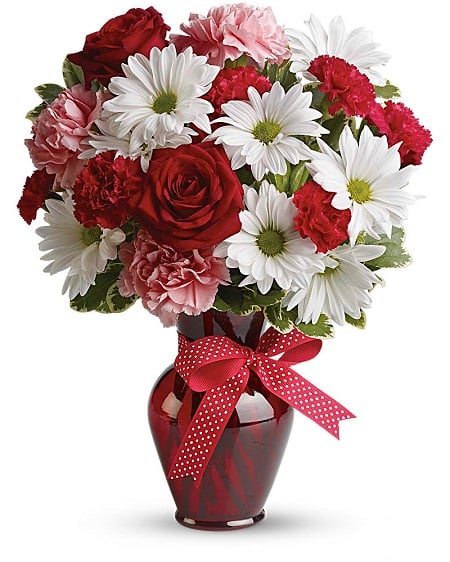
Designers Choice means the florist builds to a brief. Hospital destination, calm palette, no lilies, modest vessel that won't tip on a rolling tray. At $51.99, that gets you roughly ten stems and a wrap that reads visitor rather than funeral. I send these to AdventHealth Apopka all the time. The thing most callers miss is the second life. The flowers go home with the patient on discharge day and finish on the kitchen counter, which is actually where the real emotional return sits.
View Product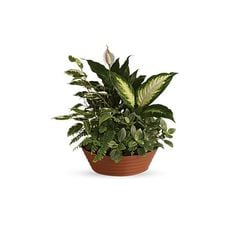
A dish garden, not cut flowers. Dieffenbachia anchoring the back, peace lily, calathea for texture, fittonia at the base. In a sympathy register this does work a bouquet cannot. It lasts months, not a week. The caller is usually a friend or coworker who couldn't make it to the service and wants to send something three weeks later that says "still thinking of you." Quiet green and cream palette, no fragrance, nothing that demands anything of the recipient. $61.99.
View Product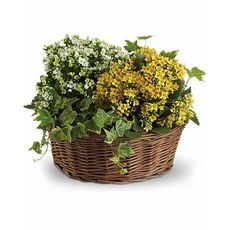
Yellow and white kalanchoes with trailing ivy in a natural willow basket. Six weeks of bloom minimum. Hospital-safe. Kalanchoes have no pollen, no fragrance, and they sit in soil rather than vase water, which matters for any ward that restricts cut flowers. Sends well to AdventHealth, to a new mom, to a sympathy-to-home order, to almost any occasion where the sender wants the gift still working the following month. In the indoor foliage capital of the world, sending a plant is also just the right joke. $61.99.
View ProductSend to
How your order ends up on an Apopka porch
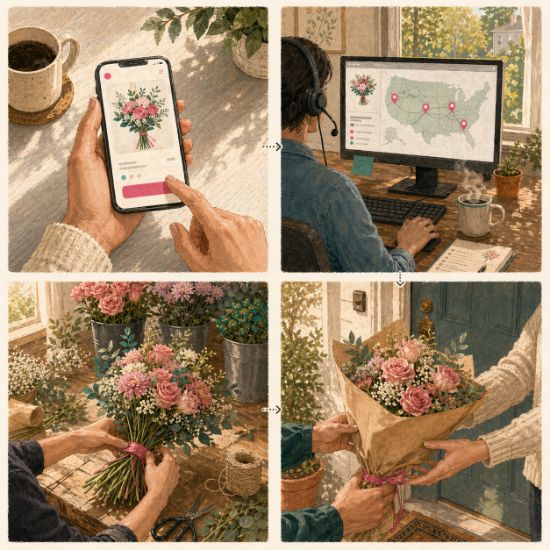
The order comes into our system in Bolivia, North Carolina. We match it to a florist in Apopka, usually within a few minutes. She has the stock already. The Colombian roses came through Miami two days ago, sat in her cooler overnight, and got built into the arrangement that morning. Her van runs Apopka routes most afternoons. Not a warehouse. Not a gift card with a URL attached. A local shop, a working florist, a van on the road.
Andrew, co-founder
What to send in Apopka, FL
Four orders come up most often on Apopka calls. A birthday for a parent or friend who moved south. A thinking of you order from someone who hasn't called in months. A sympathy order navigating a diverse community's customs. And the hospital order to AdventHealth that most senders don't know the ward rules for. Each has its own shape. Joan has guidance on all of them.
Birthday flowers from out of state
Apopka birthday orders come in from somewhere else nearly every time. The son in Portland sending to a mother in Errol Estates. The college friend in Chicago sending to someone who moved into Winding Meadows last year. The workplace that pools and sends to a coworker on leave. The order is usually the morning of or the day before, the recipient is almost always home during the day in these suburbs, and the sender wants the birthday flowers to still look good on Saturday when the photo gets posted to the family group chat.
Roses in a July Apopka delivery give you about four days. A chrysanthemum and carnation build with alstroemeria threaded through gives you closer to fourteen. The difference is not the florist's skill. It is the stem. Roses open fast in Florida heat, hit peak by day three, and start dropping outer petals by day five even in an air-conditioned home. Mums and carnations do not care. They were bred in Bogota for shipping to Miami and sitting in vase water for two weeks. If the goal is that the arrangement is still presentable when the recipient's sister visits Saturday afternoon, the stem choice is where you make that happen.
Thinking of you in Apopka?
The call that should have happened months ago hasn't. The last text was a while back. Something has been on your mind about the person in Apopka and you haven't been able to get to the phone. A thinking of you order closes that gap without the awkward opening line. It arrives at the door and says what you were planning to say on the call you kept postponing. The Apopka recipient is almost always at home during the day in these new subdivisions, so the delivery lands cleanly. If they're at AdventHealth recovering from something, the ward rules shift the call. That's a different conversation.
Joan on the Thinking of You call
These are the calls I like most. The caller usually apologizes for not having a specific occasion, and I tell them that's the best kind of order. No birthday pressure, no funeral weight, just a gesture. For Apopka I steer toward stems that last. Chrysanthemums, alstroemeria, carnation, a sunflower or two depending on the mood. Ten to fourteen days of arrangement instead of four or five. If the recipient is in the hospital, I ask which floor. ICU and oncology almost never accept fresh cut flowers at any hospital I've worked with, AdventHealth included. For those floors a kalanchoe plant basket goes through without a problem. Ward rules are national, not Apopka-specific.
Full sympathy range for the service is here.
Browse Sympathy for the ServiceA sympathy order and the question worth asking first
There are no right words for a sympathy order and the flowers can't fix it either. What they can do is say what you can't say from somewhere else. Apopka is a demographically diverse city, though. Roughly a quarter Hispanic, roughly a quarter Black, a growing Jewish community at Congregation Ohev Shalom, active Muslim and Hindu congregations, the Coptic Orthodox parish at Saint Anthony. Baldwin-Fairchild on Park Avenue and Orlando Memorial Gardens on Ingram Road handle most of the services. What any given family wants varies enormously by who they are, and the sympathy order is the one where the caller benefits most from asking the question first.
Three calls come up most often on an Apopka sympathy order. The first is a Black family planning a homegoing service, usually at a Baptist or non-denominational church. These services are flower-forward. Large standing sprays, color welcome, abundance rather than restraint. I don't cut the spend when someone tells me the service is a homegoing. The tradition expects more, not less. The second is a Hispanic Catholic family where the service is big and formal. Roses, carnations, a standing spray in white or red. Spanish-speaking staff at Orlando Memorial Gardens makes the delivery side clean. The third is a Jewish family where the caller isn't sure if flowers are OK at all. If the congregation is Orthodox the answer is usually no. A donation to a charity in the deceased's name is the traditional gesture. Reform families vary. I tell the caller to check with someone in the family before we build anything, and if nobody is reachable, a plant for the shiva house after the service is usually the safest call. Muslim families follow the same pattern. Food for the household or a charity gift is more customary than flowers at the janazah. When in doubt on any of it, call us and I can walk through what's usual for what community.
Not sure what to send?
When the weather is the problem and the occasion is not the issue, Joan's default is the plant basket.
I send Joy more than any other single product on the US site. Two kalanchoes, one yellow and one white, trailing ivy, a willow basket. Six to eight weeks of bloom. Hospital floors that reject cut flowers accept it. New parents who already have three vases on the counter accept it. Sympathy-to-home orders three weeks after the service accept it. Apopka is the indoor foliage capital of the world, and sending a living plant into a town full of greenhouses has a small private irony to it that the recipient probably won't notice. That is fine. The plant will still be blooming when the roses would have been gone. $61.99 and it travels well in Florida heat because it is a succulent and does not care.
Delivering flowers to Apopka in a Florida summer
Order by 1PM weekdays or 10AM Saturdays for same-day arrival in Apopka.
Across Apopka and nearby areas. No surge pricing, no mileage fees.
800-946-5457. Joan is usually on the phone.
Heat is the first variable. July and August heat index values in Apopka regularly sit above 110°F. A porch at noon in August is a bad place for a cut flower arrangement to wait. The florist who knows this routes Apopka afternoons early in the day and double-checks whether the recipient is home. If the recipient is out, leaving the arrangement on a shaded back porch or with a neighbor beats leaving it in full sun on a concrete front step. It helps to include a working phone number for the recipient on the order so the florist can call ahead.
Gated communities are the second. Rock Springs Ridge with its 1,050 homes, Errol Estates, San Sebastian Reserve, Emerson Pointe, Wekiva Springs Reserve. Most use resident-authorized intercom systems rather than staffed guard gates. A florist calls the intercom, the resident buzzes the driver in, the delivery lands. It is a standard process and it works, provided the recipient is reachable. If the recipient is at work and can't answer the intercom, the arrangement sits in the van until they can. Leaving a delivery note with a backup phone or a neighbor's address avoids that.
What thirty years on the bench taught me about Florida heat
I didn't work in Florida. I worked in North Carolina, which is not the same climate, but the summer months get close enough that the lessons transfer. A Piedmont July is not an Apopka July, but it is in the same conversation. I have watched hydrangeas wilt between the cooler and the van on a 95-degree afternoon in Greensboro. I know what botrytis looks like on a rose petal when the humidity has been over seventy percent for a week. Grey fuzzy mold, one petal at a time. It accelerates in warm, still, damp air. Florida in August gives you exactly that, which is why the good local florists antifungal-treat their stems in the cooler and don't let the conditioning stop.
What the bench teaches you over thirty years is which stems forgive and which don't. Roses are divas. They brown at the petal edges within hours of heat exposure, they drop outer petals by day five, and they do not like humidity. Chrysanthemums are workhorses. A Colombian mum will sit on a doorstep in 90-degree heat for two hours and still look fine. Alstroemeria is the quiet hero of any summer arrangement. One stem carries six trumpets on a branching cluster, each opens sequentially, and the whole thing holds for two weeks in a vase. Sunflowers are native to heat and act like it. Carnations have a bad public reputation in this country from gas station bouquets and that reputation is wrong. A properly-conditioned carnation will still be opening buds on day fourteen.
What I tell Apopka callers is to trust the florist on stem choice. If you picked an arrangement from the photo and it has hydrangeas or tulips in it in July, the florist is going to substitute, and what you will get is probably better than what you ordered. That is the conversation I would rather have with a caller before delivery than after.
Joan, NCCPF Certified Florist
After you order
You'll get a confirmation email within a few minutes of placing the order, and another when the florist in Apopka marks it delivered. Orders in by 1PM weekdays or 10AM Saturdays arrive same-day. Where the florist sends a photo, we pass it on. Not every florist does. About a quarter of the 15,000 partner shops across the US network send delivery photos reliably and the rest send them sometimes. That is imperfect and I know it. If you are ordering from out of state and the photo matters, tell us in the notes and we will push for one on that order specifically. The other thing worth saying. We route Apopka orders through a partner network. We don't publish which shop takes a given order because we route to whoever has the right stock that morning. That's part of the model and it's been the same since 2009. Substitutions happen. Nobody emails first on a sixty-dollar order. Substitutions favor heat-resilient stems in a Florida summer, which usually means the arrangement lasts longer than the one you ordered.
Dennis on what happens if it doesn't look right
If the photo looks off, or the recipient tells you something is wrong, call us the same day. I am on the phones most days. Dan is the other. We ring the florist in Apopka, find out what went into the vase, and sort it. Most of the time it comes down to a substitution you were never asked about, and most substitutions are fixable.
Also serving near Apopka