Shop By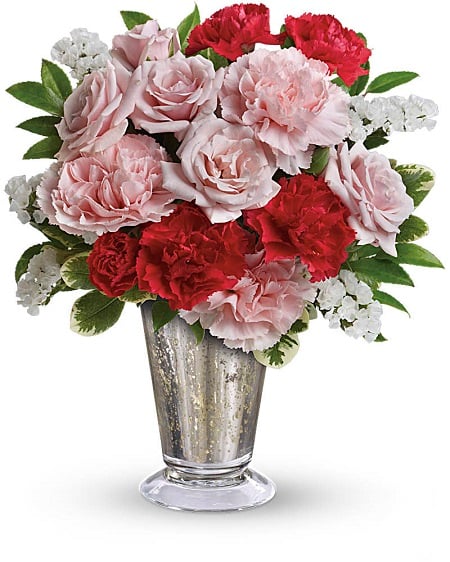
The science of sending flowers
The Language of Flowers: What Actually Happens When You Give Someone a Flower
The Victorians invented a genre, not a code. The real language turns out to be written in neurochemistry, pigment chemistry, and 130 million years of evolution. Here is what the evidence says, and what to send once you know it.
Here is the part you already suspect, so I will say it first. Nobody in 1880 sent a bouquet expecting the other person to decode it against a dictionary. The "secret language of flowers" you have read about a hundred times was a parlor amusement and a publishing fad, and its own reference books could not agree on what half the flowers meant. None of that is me being cynical. It is what the primary sources say when you actually read them.
I run a flower business, so you would think I would want the romance of the old code kept alive. I don't, because the truth underneath it is better. Strip away the Victorian trivia and what is left is a genuinely strange pile of science: a smile you physically cannot fake, a scent pathway that skips the brain's main relay, molecules that work on the same receptors as anti-anxiety drugs, and a flower whose color a gardener can flip from blue to pink with a bag of soil amendment.
We brought Joan in to keep me honest on the floristry. She spent thirty years on the bench in North Carolina and she has been on our phones since 2018, so when something is real she says so, and when it is nonsense she says that too. Her boxes are marked in teal all the way down. If you only want the practical answer, which flowers to send and why, look for those.
And near the end, once the science has done its work, Joan picks four. Four flowers for the four moments people actually send them: love, celebration, grief, and getting well. Because the last thing the research proves is the one thing you probably needed to hear anyway. The flower does not carry the message. The card does. The flower makes it land.
The code that was never a code
The romantic origin story says floriography descends from an ancient, coherent symbolic system. It does not survive contact with the sources. The version Westerners recognize was assembled in Paris in December 1819 by a woman writing as "Charlotte de la Tour," whose real name was Louise Cortambert. Her book was the first devoted entirely to the subject, and it borrowed heavily, keeping only a fraction of an earlier French dictionary and inventing or reassigning the rest, out to roughly 330 flowers and meanings across later editions. She pointed at Turkey and an Ottoman game for provenance, but modern scholarship treats a more European origin as likelier. The "ancient Eastern secret" framing was partly the book's own marketing.
From there it multiplied. The historian Beverly Seaton documents at least 98 distinct English-language flower dictionaries published between 1827 and 1923, each borrowing and contradicting the others. Her verdict on the whole genre is blunt: a "consumer phenomenon" with "tenuous ties to real lives." If it were a working code you would expect the vocabulary to be stable, the way red means stop no matter who wrote the traffic manual. Instead crocus carries six documented meanings across the corpus, and white rose carries five, two of which are direct opposites.
Some "traditional" meanings are literally uncorrected typos. The historian Brent Elliott traces the tulip's supposed meanings of "Fame" and "Charity" back to the turnip and the tulip tree. An editor conflated similarly named plants, and the mistake propagated through decades of reprints because nobody proofread it against a master reference. There was no master reference. That is the whole problem with calling it a language.
There is one clean exception, and it is not from a flower dictionary at all. In 1890s London the green carnation became a covert signal within Oscar Wilde's circle. The flower does not grow green, so it had to be dyed, which made it a deliberately constructed code word rather than a natural symbol. It was cited as evidence at Wilde's 1895 trial. That is close to the only floriographic secret in the historical record with real consequences attached. Everything else was decoration.
If any part of the tradition came close to a shared convention, it was not a flower meaning at all. It was a gesture. A flower presented upside-down reversed its meaning. And the recipient's reply was corroborated across separate period texts: touch the flower to your lips for "yes," pinch off a petal and cast it away for "no." That response protocol stayed stable between books even as the vocabulary drifted wildly. The Victorians could not agree on what a rose meant. They could agree on how to say no to one.
People still call and ask what a flower "means," and I have learned not to argue with the question, because underneath it is a better one: will this say the thing I cannot find the words for. I can answer that. I have taken that call a few thousand times since 2018. The honest version is that the meaning lives in the card and the gesture, not in a Victorian lookup table nobody agrees on. Send something that suits the person and the room, write the card like you mean it, and you have done the thing. Thirty years on the bench never changed that, and it will not.
What a flower does to your brain and body
Hand someone a flower and something involuntary fires before they have decided anything about it. Flowers produce measurable, replicated effects on mood and behavior, and the strange part is how little of it is symbolic. The mechanism is olfactory and social. No code, no decryption. The flower trips older machinery, the kind we share with animals that were smelling their way through the world long before anyone wrote a dictionary.
The single most solid result comes from Jeannette Haviland-Jones and colleagues, published in Evolutionary Psychology in 2005. In the gift study, every woman who received flowers produced a Duchenne smile, the involuntary, eye-crinkling smile that is very hard to fake. One hundred percent. The control gift did not come close. A single flower in a shared elevator changed how strangers behaved toward each other. Flowers in the homes of older adults were linked to better mood and sharper episodic memory. This is coded facial-muscle measurement, not a survey, which is why it carries so much weight. If you want the fuller picture on that effect, we wrote it up separately in how floral gifts affect mental health.
Every other sense, sight, hearing, touch, taste, routes through the thalamus, the brain's central relay, before it reaches higher processing. Smell is the exception. Olfactory signals travel more directly to the amygdala and hippocampus, the seats of emotion and memory. This is a wiring fact, not a metaphor, and it is the standard explanation for why a scent can drop you into a vivid memory faster than any photo. Flowers are one of the most common scent triggers in daily life, which puts them right in the path of that shortcut.
Screenshot for the next time someone says smell is "just a sense": it is the only one wired straight to memory.
The effects are not vague aromatherapy either. Individual floral molecules act on named receptors. Linalool, the compound that dominates lavender, produces a calming effect through the same receptor class that anti-anxiety benzodiazepines act on. The tell that this is real: the effect is cancelled by flumazenil, the drug used clinically to reverse those medications. Cut the pathway and the calm disappears. The landmark mouse study is from 2018 at Kagoshima University, and it added one more wrinkle. The effect vanished in mice with no sense of smell, so linalool works through the nose first, not by seeping straight into the brain. There is a fuller, practical version of this in our guide to using floral scents for relaxation.
Rose scent has its own file. Its characteristic compound, 2-phenylethanol, produced antidepressant-like effects in mice, and rose oil exposure has been linked to lower cortisol, the body's central stress hormone. None of this needs you to believe in energy or auras. These are molecules on pathways with names.
You are probably thinking, fine, but mice are not people, and you are right to. The human aromatherapy trials are noisier than the animal work, and anyone who tells you a bouquet is a prescription is overselling. Here is the honest read, the one I would give a friend. The receptor science is real and the calming is not imaginary, but a flower is not medication. It is a small, reliable lift, arriving through a sense most gifts never touch. A modest claim, and modest claims are the ones that hold up.
One for the group chat: two centuries of "meanings" boiled down to a single sentence.
The Victorians did not invent a code. They invented a genre. The real code is written in neurochemistry.Part Three follows
The chemistry of color
Unlike the meaning-lists, flower color is real, hard biochemistry, and it produces facts no marketing article mentions. Reds, purples, and blues come from anthocyanins. Yellows and oranges come from carotenoids, which the plant needs for photosynthesis anyway. A separate pigment family, betalains, produces the vivid magenta of beets and bougainvillea, and it obeys a rule so strict no plant in the world breaks it: betalains and anthocyanins never occur together in the same species. Ever.
The showpiece is the hydrangea. The same genetically identical plant produces blue flowers in acidic soil and pink flowers in alkaline soil, because soil pH controls whether aluminum is soluble enough for the roots to absorb. Below about pH 6, aluminum is available, travels to the sepals, and locks the pigment into a blue complex. Above about pH 7, the aluminum stays trapped in the soil and the same pigment reads pink. Gardeners who "turn their hydrangeas blue" are doing applied inorganic chemistry.
The tidiest chemistry lesson in any garden, running on nothing but soil pH.
The bee cannot see the red the hummingbird finds obvious
Bee vision is trichromatic but shifted from ours. Bees see ultraviolet, blue, and green, and they have no red photoreceptor at all. A pure red flower reads to a bee as a dark, low-contrast shape, close to invisible, unless the flower also reflects a secondary ultraviolet peak that gives the bee another channel. Birds, including hummingbirds, do have a red receptor, which is a large part of why so many hummingbird flowers are red. That red is a bright, high-contrast signal to the pollinator that sees it best, and nearly invisible to the bees competing for the same nectar.
None of this beauty was built for us. Flowering plants appeared roughly 130 million years ago, tens of millions of years before any human, and a flower is essentially an angiosperm's way of manipulating an insect. Charles Darwin proved the point in the most satisfying way possible. Handed a Madagascar orchid with a foot-long nectar spur in 1862, he predicted a moth with a matching tongue must exist, sight unseen. The moth was found in 1903 and named "praedicta," the predicted one. If you want the friendly version of that arms race, our guide to flowers for butterfly and hummingbird gardens is built on exactly this.
The reason "flowers are pretty" is really "flowers are advertising, and not aimed at us."
White is the proof that color meaning is not hardwired
In the modern West, white reads as an ancient, eternal symbol of purity, especially at weddings. It is not ancient. Queen Victoria wore white to her 1840 wedding as a personal choice, not a tradition, and the "white equals purity, always has" story was manufactured about a decade later, largely through a magazine instructing readers that white was the "proper" bridal color. Contrast that with white in East Asian mourning, which is genuinely ancient, traced back over 2,000 years through Confucian, Buddhist, and Five-Elements traditions. Two unconnected cultures landed on the exact same color with opposite emotional meanings, on wildly different timelines. If color-emotion links were wired into human biology, that could not happen. It is close to a natural experiment against the whole idea.
The world's other flower languages
Treating the Victorian list as "the" language of flowers erases most of the world's actual floral symbolism, and some of the other systems are older, more coherent, and still in daily use. A few worth knowing.
The Hawaiian lei
Still in use todayA flower worn over the left ear signals a committed relationship. Over the right ear, single and available. It is a genuinely functional, still-observed social signal, which arguably makes it a more real "language of flowers" than anything Victorian England produced.
Japanese hanakotoba
Built on real structureThe camellia carries a dark samurai-era association, because the whole flower head drops at once rather than shedding petals, it was linked to beheading. The cherry blossom stands for the beauty of impermanence, a meaning later bent toward wartime symbolism.
The Persian rose and nightingale
A mystical traditionClassical Persian and Sufi poetry built a whole symbolic universe on the nightingale's hopeless love for the rose, a metaphor for the soul longing for the divine. This is literary depth, not a greeting-card gloss.
Numbers that carry weight
Homophone logicIn China, the chrysanthemum ties to the number nine through a near-homophone, doubly anchored because it blooms in the ninth lunar month. Meaning attaches through the sound of the word, not an arbitrary assignment in a dictionary.
The gifting rules that are still live, and still risky
The Victorian list is dead. Several cross-cultural conventions are very much alive, and getting one wrong turns a kind gesture into a painful one. If you are sending across a border or into a culture you do not know well, these are the ones that matter, ranked by how much damage a mistake does. There is a fuller companion piece in our guide to flower-gifting etiquette.
This is the one place I get firm on the phone, because I do not want you sending the wrong flower into a grieving house on the other side of the world. Two rules I actually use. Going to France, Italy, Spain, Belgium, or Germany, no chrysanthemums, and check the mixed bouquets because mums love to hide in the filler. Going to a Russian or Eastern European household, odd number of stems, never even. When you do not know the culture well, let the florist near the recipient choose and put the rule in the note. They build to a safe brief from what is fresh that morning, which beats you picking stems blind from another country.
Beautiful but deadly
Some flowers carry a history that has nothing to do with romance. It is a layer almost no "meaning of flowers" article touches, and it is a lot more interesting than another list of Victorian sentiments. We went deeper on this in the dark side of the flower trade, and on the healing side in flowers with medicinal benefits.
| Flower | The story underneath |
|---|---|
| Foxglove | William Withering's 1785 study of it became the foundation of modern cardiology. The digitalis-class heart drugs still in use trace straight back to this flower. |
| Monkshood (aconite) | Not folklore. A 2010 English murder conviction turned on aconite poisoning, the first such prosecution since 1882. "Beautiful but deadly" is not an exaggeration here. |
| Scheele's Green | An arsenic pigment used to dye artificial flowers vivid green in the 1800s. It killed a flower-maker named Matilda Scheurer in 1861. The pursuit of flower-like color killed a woman making fake flowers. |
The everyday version is milder but worth knowing before you order. Lily pollen stains, and lilies are toxic to cats, which is exactly why Joan steers hospital and cat-household orders away from lilies further down.
Repeated online versus the evidence
Because so much flower content just repeats the last article, several confident "facts" fail basic checking. Here is the scoreboard, with the honest verdict on each. If you enjoy this sort of thing, we keep a running list in flower superstitions that change how you see flowers.
Myth-buster scoreboard
Sold already? Jump to the four flowers Joan actually recommends.
The four moments people actually send flowers
By the time you are at the checkout, you are not really asking what a flower means. You are asking whether it will land. There are only a handful of reasons a person sends flowers, and the psychology of each is different. A big 2017 survey found the message people mostly send has collapsed to one line, "I love you," and that they rarely think about meanings at all. So the useful question is not "what does this flower mean." It is "what is this moment, and what will land in it." Joan has taken every one of these calls for years. Start with the moment you are in.
Which moment are you in?
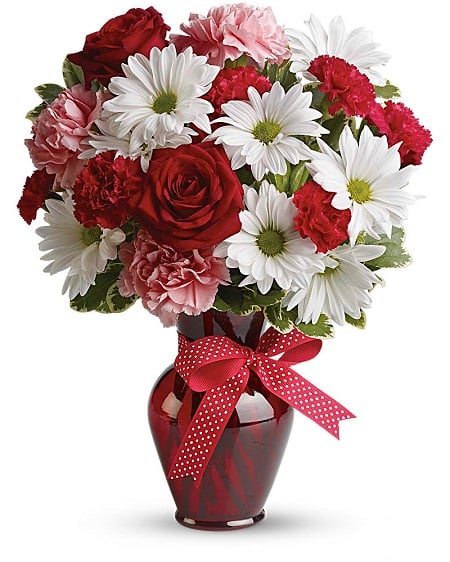
Early romance. Joan's steer is effort without over-declaring. A few red roses carrying the message, not a dozen that shout. See Kisses below.
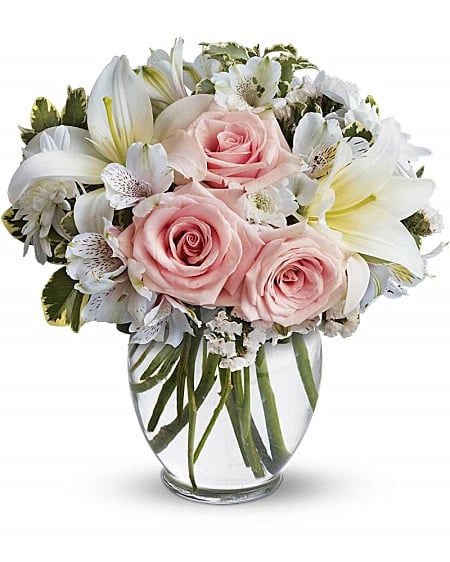
See Joan's pickBirthday or a win. Color and one personal line on the card. Warm, cheerful, holds its shape. See Dare To Wish below.
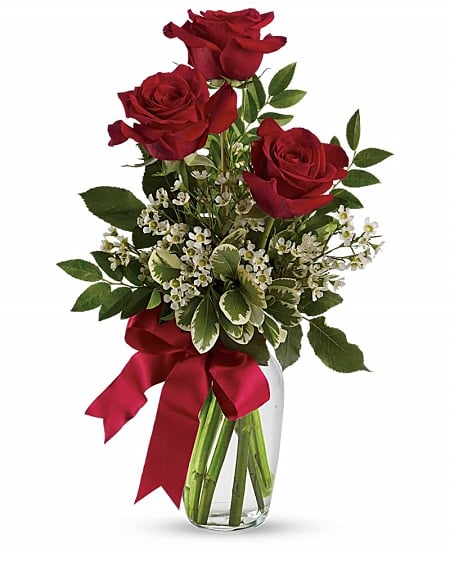
See Joan's pickGrief. White and green, kept simple, safe across traditions. See the Sympathy pick below.
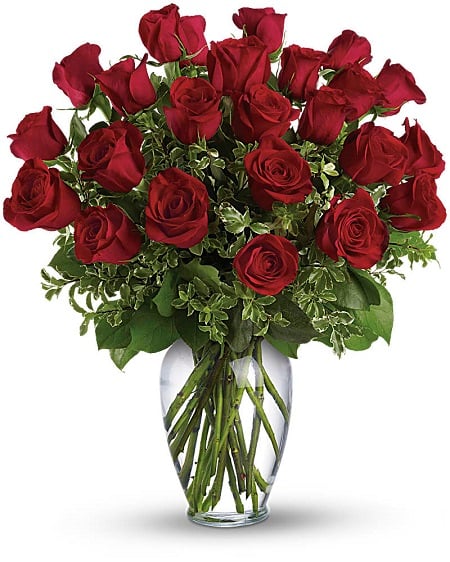
See Joan's pickGet well. Lily-free, low scent, in a vase it can stay in. See Lilac Surprise below.
See Joan's pick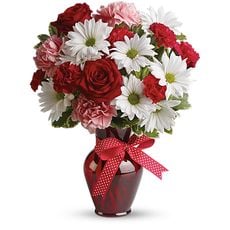
Kisses
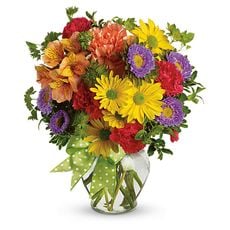
Dare To Wish
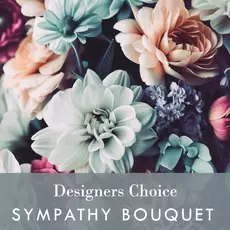
Designers Choice Sympathy
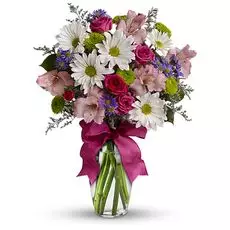
Lilac Surprise
If the words won't come
The research is clear that the card carries the message, not the flower. You do not need to be a poet. Short and honest beats clever every time. A starting line for each moment:
- Love
- "I saw these and thought of you. That happens more than you know."
- Birthday
- "Happy birthday. Still glad you were born, still glad we're friends."
- Grief
- "There are no right words. I am thinking of you, and I am here."
- Get well
- "Rest up. The world can wait. Something bright while it does."
Nine out of ten "I do not know what to send" calls end the same way once I say it. Let the florist choose. You give the occasion and the budget, and the florist near the person builds from what is genuinely fresh that morning instead of you locking them into stems they then have to swap. Here is the honest part I make sure people hear: the photo on the website is a mood, not a contract. On a Tuesday build the florist uses what came off the truck that morning, so the palette matches but the exact stems may not. The customers who understand that are the happiest ones I ever dealt with. And whatever you land on, the card is where the message lives. Order before 1PM on a weekday, or 10am on a Saturday, and it can still go the same day. One last thing, because it is the question people call back about. Most people photograph the flowers and text a thank-you within the hour. If you do not hear anything by lunch, that is a busy day on their end, not a bad bouquet.
Why a "useless" gift works so well
There is a genuine theory behind why flowers land harder than their price suggests. Evolutionary biology calls it costly signaling. A gift that is perishable, non-utilitarian, and impossible to resell is hard to fake as "just being nice." You cannot eat a rose, you cannot re-gift it, and it dies in days. That impracticality is the whole point. A gift you could just as easily have handed cash for does not prove the giver was thinking about you specifically.
Andrew The numbers back the theory in a way I find almost funny. The global cut-flower market runs somewhere in the high-30s billions of dollars in 2026. On Valentine's Day, roses that cost a dollar or two a dozen at the farm gate in Colombia retail here around twelve dollars each. That price is demand doing the work, concentrated into a 48-hour spike, and it has almost nothing to do with what the flower cost to grow. The steep price and the short shelf life are exactly what make the gesture credible. An Australian telling Americans that overpriced, fast-dying flowers are the honest signal. I know how it sounds. The economics agree with me anyway. If you want to see the machine behind that spike, we pulled it apart in the imported Valentine's Day operation.
The whole thing, in numbers
What the evidence actually leaves you with.
Questions people actually ask Joan
Do flowers really have secret meanings?
Not in any reliable way. The Victorian dictionaries that assigned meanings contradicted each other constantly, and almost nobody uses them today. The meaning lives in the card and the occasion, not the species. Send what suits the person and write the card honestly.
How many roses should I send?
For a new relationship, a few carrying the message beats a dozen that shout. A full dozen reads as serious romance or a milestone. There is no hidden rule about specific counts in the real historical record, that is a modern invention. If you want the classic red-rose look, browse our roses.
What flowers are safe to send to a hospital?
Low-scent, low-pollen, and in a vase it can stay in. Skip lilies, they shed pollen and the scent is heavy in a shared room. Check whether the specific ward accepts flowers first, since some do not. Our lily-free get-well flowers are built for exactly this.
What should I not send to a funeral overseas?
In France, Italy, Spain, Belgium, and Germany, avoid chrysanthemums, they read as funeral flowers. In Russia and Eastern Europe, avoid even numbers of stems. If in doubt, tell the florist near the recipient and let them build to a safe local brief.
Why do flowers make people happy?
It is measurable, not sentimental. Recipients produce a genuine, involuntary smile, scent reaches the brain's emotion centers by a uniquely direct path, and certain floral molecules act on calming receptors. A flower is a small, real lift arriving through a sense most gifts never touch.
Keep reading
If this was your kind of thing, three more from the same shelf.
Not sure which moment you are in, or want a florist to steer you the way Joan would? Browse the range, or call and one of our team will talk it through.
Browse Joan's picksLily's Florist USA delivers coast to coast through a network of 15,000+ partner florists.
Flat $16.95 delivery. Same-day when you order before 1PM on weekdays or 10AM on Saturdays.
Serving the US since 2017. The Lily's brand has run since 2009.
Questions? Call 800-946-5457 or email [email protected]
About the authors
Written by Dennis, reviewed for floristry by Joan, with the economics from Andrew. Between them, three decades on the flower bench and the people who built the US operation. The Lily's Florist US story.
Andrew, co-founder of Lily's Florist, with family.
Sources
- Haviland-Jones et al. (2005), "An Environmental Approach to Positive Emotion: Flowers," Evolutionary Psychology 3(1). Link
- Harada et al. (2018), "Linalool Odor-Induced Anxiolytic Effects in Mice," Frontiers in Behavioral Neuroscience. Link
- Ueno et al., "Anti-depressive-like effect of 2-phenylethanol inhalation in mice," ScienceDirect. Link
- Pucker et al. (2024), "Multiple mechanisms explain loss of anthocyanins from betalain-pigmented Caryophyllales," New Phytologist. Link
- Lehmann, Elliot, Calin-Jageman (2018), "Meta-Analysis of the Effect of Red on Perceived Attractiveness." Link
- Peperkoorn, Roberts, Pollet (2016), "Revisiting the Red Effect on Attractiveness and Sexual Receptivity." Link
- Palmer & Schloss (2010), "An ecological valence theory of human color preference," PNAS. Link
- Alghamdi (2022), "A test of the ecological valence theory of color preference, the case of Arabic," Frontiers in Psychology. Link
- Yoshida et al., hydrangea blue-complex chemistry (delphinidin-3-glucoside, aluminum, acylquinic acid). Link
- "Curious Chemistry Guides Hydrangea Colors," American Scientist. Link
- Louise Cortambert ("Charlotte de la Tour"), Le Langage des Fleurs (1819), Cornell Library exhibition. Link
- Murder of Lakhvinder Cheema (aconite), 2010 conviction. Link
- Darwin, Angraecum sesquipedale and Xanthopan morganii praedicta, Britannica. Link
- Cut flowers market size, Mordor Intelligence (2026 estimate). Link
- Beverly Seaton, The Language of Flowers: A History (University of Virginia Press, 1995). Print source.
- Bloom & Wild 2017 consumer survey on flower meanings. Reported figures, not independently re-verified.
Where a claim is contested or a figure could not be independently re-verified, the article says so rather than presenting it as settled.