Shop By
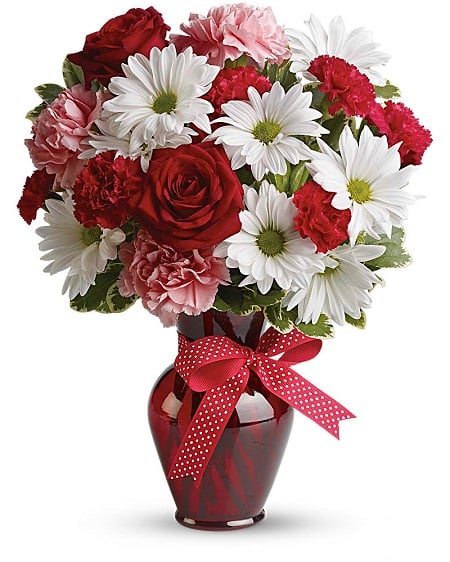
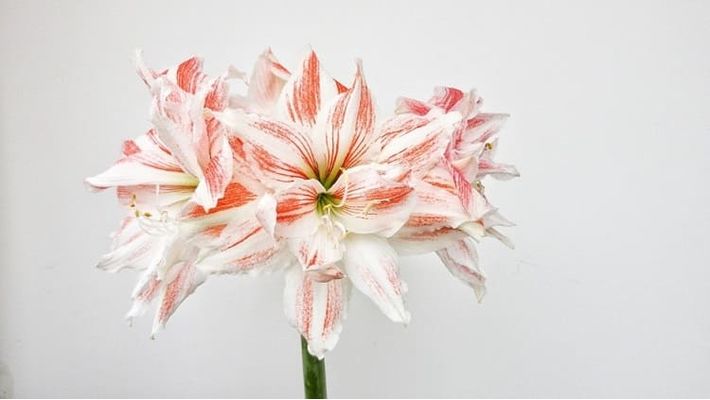
Amaryllis is the plant that breaks the rule without trying. It shows up looking more like something from a botanical garden in the tropics than anything you would expect next to a candy cane, and it does it every single winter, right on cue, without anyone forcing it.
I asked Joan, who has spent more mornings than she can count matching flowers to occasions, why amaryllis keeps landing on people's porches and mantels every December. Her answer took longer than I expected, and most of it is below.
The short version: it is not just a pretty bulb. It is a plant with a Greek myth attached to it, a naming argument florists still have not settled, and a habit of outliving the tree it sat next to.
What Makes Amaryllis Different From Every Other Christmas Flower
Ask ten florists what an amaryllis actually is and expect ten different answers, and at least three of them will disagree with each other. That is not sloppiness. It is a genuine, decades-old mix-up that never quite got sorted out.
The true Amaryllis is a South African bulb with only two species to its name, A. belladonna and the far rarer A. paradisicola. The flower most of us picture when we hear the word, the one filling shelves every November and December, is something else entirely. It is a Hippeastrum, native to Central and South America, with roughly 90 species and more than 600 cultivars bred from them. Commercially, everyone still calls it amaryllis. Botanically, that is not quite right. For the rest of this guide, we are doing what the whole floral industry does and using the common name anyway.
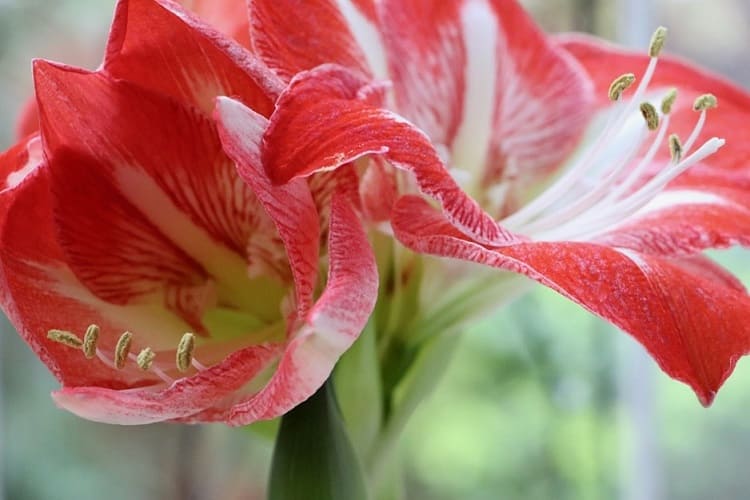
Whatever you call it, the flower itself does not do anything by half measures. Each stalk pushes out trumpet-shaped blooms with six tepals, some stretching past 10 inches across, on top of long strap-shaped leaves that stay green well after the flowers fade. Cared for properly, a single bulb can keep flowering for up to 75 years. That is not a typo. Most Christmas plants are gone by New Year. This one can outlast the person who bought it.
I hear the same question every December, usually from someone who has never grown one before. Will this actually bloom in time? With a cut arrangement I can promise a week, maybe ten days if it stays cool. A bulb plays a different game. Plan on six to eight weeks from a bare bulb to the first flower, and once it opens, that stalk holds for two to three weeks on its own. Give it bright, indirect light and water only when the top inch of soil is dry. Most people drown them. If it is going on a mantel above a fireplace that runs all December, move it back a foot or two. The heat and dry air do to a bulb what they do to a cut stem. They pull the moisture out faster than the label accounts for. Stake the stalk once it passes about a foot, a full head of amaryllis flowers is heavier than it looks. And if anyone in the house has a good tablecloth nearby, snip the anthers before the pollen sheds. It stains exactly the way lily pollen does, and most people do not find out until it is on the good cloth.
How Long Does a Christmas Flower Actually Last?
Typical lifespan from arrival to compost bin. Bars are illustrative, not to scale, since one of these numbers is measured in decades.
The Legend of Amaryllis and Alteo
Long before amaryllis showed up in gift catalogs, it had a body count. Or at least a broken heart, depending on which version of the Greek myth you were told.
The story goes that a shy maiden named Amaryllis fell for a shepherd named Alteo, who cared more about his garden than any of the young women trying to catch his attention. Alteo made a standing offer. He would give his heart to whoever brought him a flower he had never seen before. Amaryllis wanted that flower badly enough to visit a High Priestess for help.
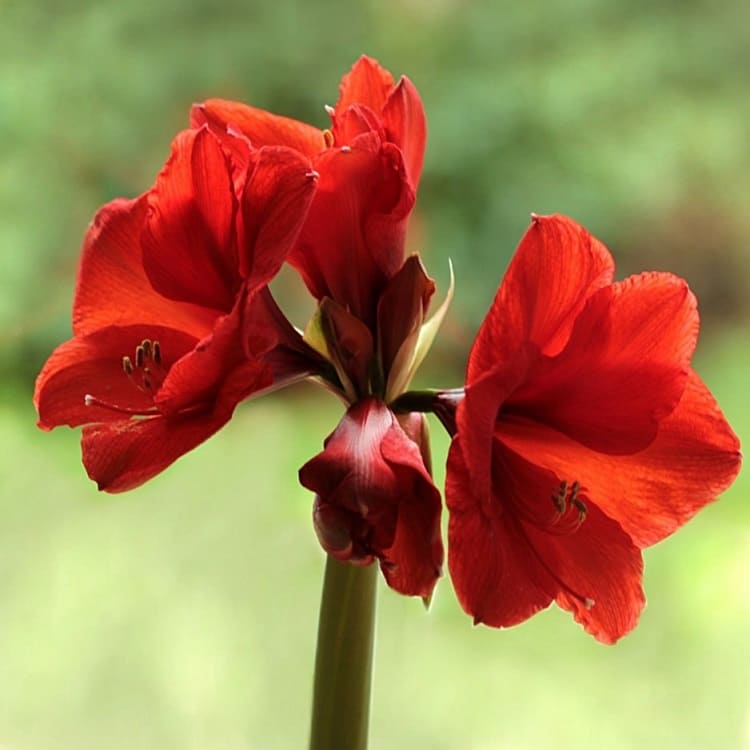
The instructions were strange and specific. Amaryllis had to pierce her own heart with a golden arrow, then walk the same path to Alteo's cottage every day for thirty days straight, letting her blood fall along the way as she went. She did it. Day after day, nothing bloomed. Then, on the thirtieth day, she found the path lined with blood red flowers that had not been there the morning before.
She gathered an armful and ran to Alteo's door.
When Alteo opened the door, he was struck by two things at once. The flower he had never seen. And the maiden holding it.The Legend of Amaryllis and Alteo
How Many Amaryllis Varieties Are There
Once you start looking past the standard red bulb in the grocery store display, the variety gets a little absurd. Breeders have been crossing Hippeastrum cultivars for well over a century, and the color range now runs from pure white to a red so deep it looks almost black, with every shade of pink, salmon, and apricot in between.
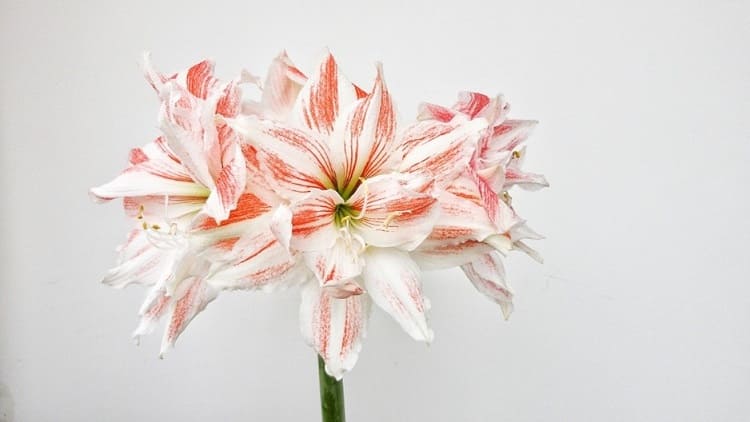
Apple Blossom
Dutch cultivarDelicate pink blush that fades toward white at the center. The gentlest amaryllis on this list, and often the one people pick for a first-time gift.
Ferrari
Classic holiday redThe bulb most people picture when they hear the word amaryllis. Saturated red, sturdy stalk, the default for a reason.
Minerva
Red and white stripedBright red-and-white petals opening onto a kiwi green throat. One of the more photographed cultivars for a reason.
Athena
Dutch cultivarPure white blooms that can stretch past 7 inches. Reads as elegant rather than festive, which suits some recipients better.
Cherry Nymph
Double bloomRed double blossoms, ruffled like a peony rather than trumpet-shaped. Not the bulb to pick if you want the classic look.
Half and Half
Two-tonePetals split cleanly between red and green. Unusual enough that most recipients have never seen one before.
Papilio
Butterfly amaryllisPatterned petals that genuinely resemble butterfly wings. Closer to a collector's plant than a Christmas default.
Rilona
Dusky apricotApricot petals traced with deep orange veins. Harder to source, which is exactly why it shows up on wish lists.
Not Sure Which One? Match a Style
Match the gift to how the recipient actually decorates, not to the bulb you saw first.
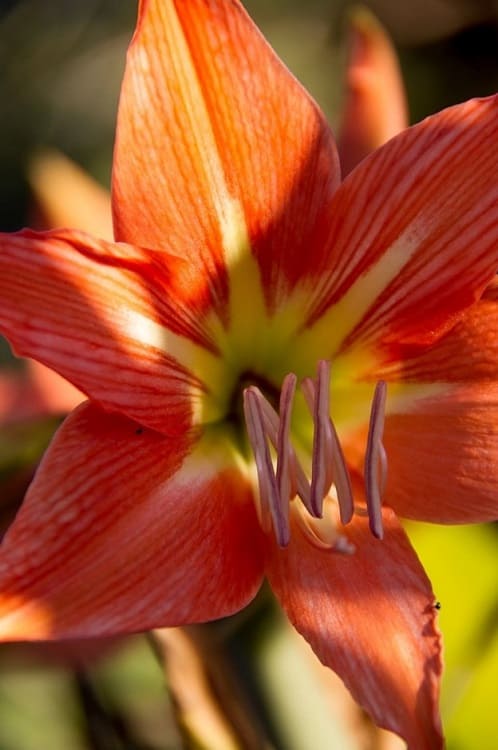
Ferrari or Minerva. The bulb most people picture when they hear the word amaryllis, in saturated holiday red or the red-and-white striped version with the kiwi green throat. Safe, festive, exactly what the recipient is expecting.
Apple Blossom or Athena. Soft pink blush or pure white blooms past 7 inches. Reads as elegant rather than festive, which suits a recipient whose home is more neutral tones than tinsel.
Papilio or Rilona. Butterfly-patterned petals or dusky apricot traced with deep orange veins. Harder to source, which is exactly why they land well with a recipient who has seen every standard amaryllis before.
Cherry Nymph or Half and Half. Ruffled red double blooms, or petals split clean between red and green. Neither looks like the amaryllis on the box at the grocery store.
Why Amaryllis Belongs Under the Tree
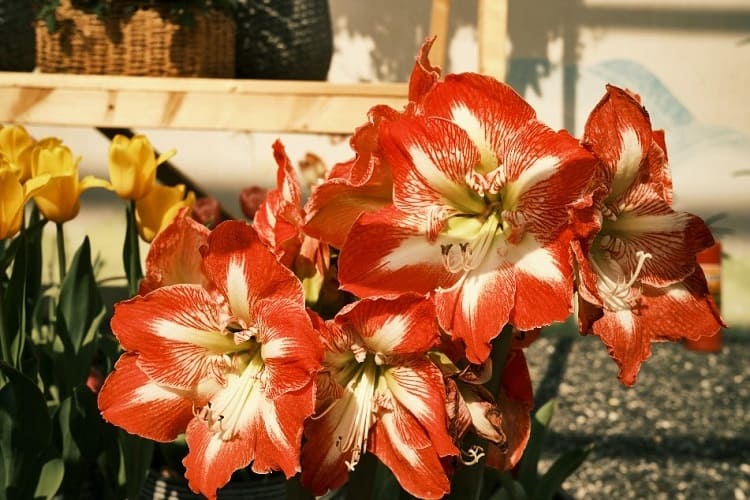
Amaryllis earns its spot at Christmas honestly. It photographs like a showpiece, but the reason it keeps getting picked as a gift runs deeper than how it looks in a doorway.
The flower carries centuries of symbolism around love, beauty, and strength, most of it tracing straight back to the myth above. A shy maiden who did something genuinely hard to win someone's attention. A flower that only bloomed because she kept showing up. Give someone a potted amaryllis at Christmas and you are handing them a story about persistence dressed up as a houseplant.
There is a practical case too. Most Christmas plants are compost by January 2nd. An amaryllis bulb, stored correctly through its dormant period, will flower again next winter, and the winter after that. It is a gift that reappears every December instead of one that gets thrown out with the wrapping paper.
Not every bulb kit arrives ready to go, and I would rather say that than pretend otherwise. A healthy bulb feels firm at the base, has dry papery skin, and often shows the tip of a green shoot already pushing through. If it feels soft anywhere, or the neck looks dark and wet, that bulb has likely rotted in transit and it is not going to recover no matter how well you water it. That is the one thing I tell people to check within the first day, not the first week. Catch it early and we can replace it before the season is gone. Catch it in week three and there is nothing left to save.
Andrew Most of the bulbs sold for the holiday season come out of the Netherlands and South Africa, graded by size months before they ever reach a US warehouse. That is a longer supply chain than a same-day bouquet, and it changes how far ahead you need to order. Live bulbs move through our network differently than cut arrangements. A cut bouquet gets built and delivered same day. An amaryllis bulb kit ships ahead of the rush, usually a week or more before Christmas, because the bulb needs time to root before it is worth planting. Order it too close to the 25th and you are gifting someone a bulb with nothing to show for it on the day. Order it by early December and it has a real shot at blooming before New Year.
Keep Exploring
If the amaryllis has you rethinking what counts as a Christmas flower, here is where to go next.
Amaryllis bulb kits and ready-to-bloom potted arrangements are part of our Christmas flowers collection, alongside the full plant range if a living gift is what you are after this year.
Shop Christmas FlowersLily's Florist delivers across America through a network of 15,000+ partner florists.
Same-day delivery on orders placed before 1PM weekdays or 10AM Saturdays.
Questions about amaryllis, or anything else? Call 800-946-5457.
About the Authors
This post was written by Dennis, with floristry guidance from Joan and an operational note from Andrew on how live plants move through our delivery network. Read our full story.

Dennis and family.